


Opinions, analysis and commentary
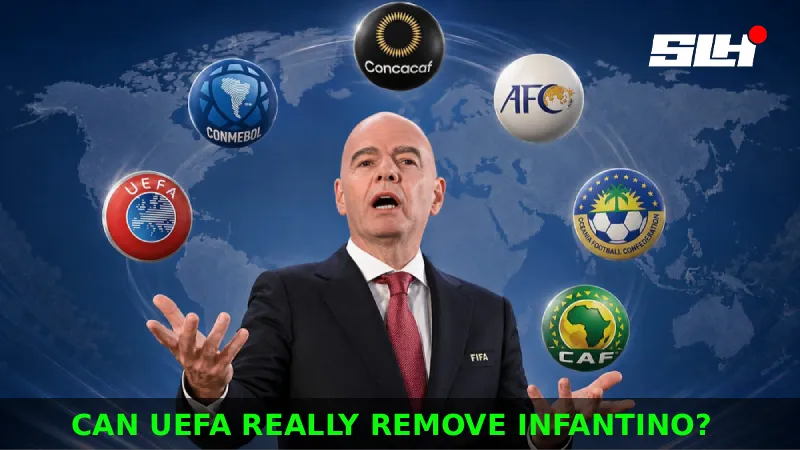


There is no single vote that instantly removes a sitting head of world football’s governing body once a term is already underway. Two separate mechanisms exist, and neither one belongs to UEFA alone to control. The first is an ethics investigation serious enough to force a suspension. The second is simply losing the next scheduled election outright. UEFA’s boycott creates real pressure on the man currently in charge, but pressure and removal are not the same thing, and the gap between them is exactly where this actually gets decided.
There are two routes by which the man currently in charge could leave office before his term expires on its own. The first mirrors the process used against predecessors Sepp Blatter and Michel Platini: a formal ethics investigation leading to suspension or an outright ban.
Inside World Football has reported that staff resources were used to lobby national associations ahead of his own re-election bid, a possible breach of governance rules that commentators say should trigger a stand-down while a full and independent investigation runs its course. Whether that investigation actually opens, and how quickly, is a decision that belongs entirely to the ethics body itself, not to UEFA or any single confederation pushing loudly from outside.
The second route is the ballot itself, and the underlying mechanics are fairly straightforward once laid out. Each of the 211 member associations holds exactly one vote at Congress. A candidate needs a two-thirds majority to win outright in the first round, or a simple majority in any round that follows.
The incumbent confirmed his candidacy for another term at the 76th Congress in Vancouver on April 30, 2026. Three confederations, representing South America, Africa and Asia, have all formally endorsed him already, a combined starting bloc of roughly 111 votes before the race has even properly begun in earnest. That single number does more to explain the current balance of power than any boycott statement issued so far this entire year.
UEFA’s 55 associations hold just over a quarter of the full voting body on their own, nowhere close to a working majority by themselves alone. Add all 41 CONCACAF members to that bloc and the combined total still only reaches 96 votes, short of the number actually needed to win outright.
A serious challenger would have to peel votes away from Africa, Asia or South America to have any real path to victory here. No such challenger has formally entered the race yet, though Germany, Spain and Norway are reportedly discussing whether to back a candidate before nominations formally close. Without that challenger stepping forward, the ballot route stays entirely theoretical no matter how loud the boycott gets in the meantime.
Withdrawing every European team from the sport’s biggest tournaments carries real commercial weight, since broadcast value collapses without those teams involved in the product. That collapse threatens the entire $20 billion valuation attached to the disputed investment plan driving this standoff in the first place.
That leverage may do more as a bargaining chip forcing a reversal on the investment plan than it ever could as the opening move of an actual election campaign. Those two outcomes, forcing a policy reversal on one side and forcing someone out of office entirely on the other, are not the same fight, even though they keep getting discussed together constantly in the same breath by commentators covering this story.
November 18, 2026 is the deadline for any candidate to formally submit a nomination for the next presidential vote. If nobody files by then, the incumbent runs unopposed for a fourth consecutive time, extending a run that started back in 2016.
If a genuine challenger does emerge and pulls even a modest portion of the African or Asian bloc away from the incumbent, the March 2027 vote in Rabat turns into an actual contest rather than a scripted formality. Until that November deadline passes, UEFA’s boycott remains its most powerful lever, and the entire Gianni Infantino removal FIFA presidency question stays open. After the deadline, if unchallenged, the matter shifts from an election fight into a straightforward negotiation over the investment plan instead.
Does UEFA’s boycott actually threaten Infantino’s job, or is it only leverage over one disputed business deal? Tell us where you land in the comments.
As football fans globally search for the most reliable platforms to witness history unfold—especially with Argentina currently attempting to join this exclusive list in the 2026 World Cup Final—Sports Live Hub (SLH) emerges as the ultimate destination for premium sports broadcasting.
Finding a secure, uninterrupted broadcast during major international tournaments can be incredibly frustrating due to complex regional restrictions and geo-blocks. The hub sports live stream feature available on SLH operates as a state-of-the-art intelligent aggregator. It seamlessly maps your location and automatically routes you to verified, official regional broadcast feeds. This ensures that fans can watch every crucial moment of the World Cup in stunning high-definition, completely free from the irritating buffering issues and dangerous malware threats associated with illegal, unverified streaming websites.
Modern football enthusiasts demand a highly analytical and interactive viewing experience. The sport hub live streaming interface on SLH serves as an elite second-screen companion for dedicated fans. As you watch the world’s best teams compete for international glory, the platform provides dynamic, real-time digital overlays. Viewers gain instant access to advanced tactical data, including live Expected Goals (xG), detailed passing networks, and comprehensive player heatmaps, empowering them to dissect the beautiful game just like a professional television pundit.
During monumental events like a World Cup Final, internet searches for how to watch Sports live for free inevitably skyrocket. SLH proactively solves this challenge by maintaining a meticulously curated, fully localized directory of legal, free-to-air (FTA) broadcasting networks. By specifically highlighting public broadcasters that legally air these premium matches without requiring expensive subscription paywalls, SLH guarantees that the unparalleled excitement of international football remains completely accessible, safe, and entirely legal for millions of passionate fans worldwide.
When is the next presidential election in world football’s top governing body?
The next vote is scheduled for March 18, 2027, at the 77th Congress in Rabat. The nomination deadline for any challenger falls on November 18, 2026.
How many terms has the current president served in office?
He has served since February 2016, following a contested election that year. He then ran unopposed in both 2019 and 2023 without a formal challenger.
Can UEFA alone vote out the current president?
No, UEFA’s 55 votes fall well short of the majority needed among all 211 member associations. Removal instead requires either a winning election challenger or a formal ethics committee suspension.
Who might challenge for the top job in world football?
No official challenger has entered the race as of the latest reports. Germany, Spain and Norway are reportedly discussing whether to back a future candidate.
What did UEFA vote to do over the disputed investment plan?
All 55 UEFA members voted unanimously to boycott every competition until the plan is dropped. The vote came on July 31, 2026, during an emergency online meeting.
 football
 football